General Service and Maintenance
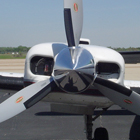
A propeller is one of the most highly stressed components on an aircraft. During normal operation, 10 to 20 tons of centrifugal force are acting to pull the blades from the hub. The blades are routinely subjected to bending, flexing, and vibratory forces. Damage to a propeller component, such as a stone nick, corrosion, or a ground strike, may act as a stress riser and become the initiation site for a fatique failure which can progress to an abrupt failure of the propeller.
Failure of a propeller blade, clamp, or hub can be many times more severe than an engine failure. In some cases, the vibrations and unbalanced load imparted by the failed propeller have torn the engine from the engine mount, rendering the aircraft uncontrollable. There is also the possibility that a portion of the failed propeller could become a projectile and pierce the aircraft cabin.
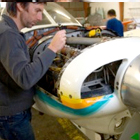
Due to the catastrophic nature of a propeller failure, it is essential that the propeller be properly maintained according to the recommended service procedures. The propeller should be inspected and overhauled in accordance with the proper procedures, and at the specified intervals. The propeller should also be inspected before flight to detect impending problems before they become serious. Any grease or oil leakage, loss of air pressure, unusual vibration, or unusual operation should be investigated and repaired as it could be a warning that something serious is wrong.
Please refer to your owner’s manual for troubleshooting and inspection information.